
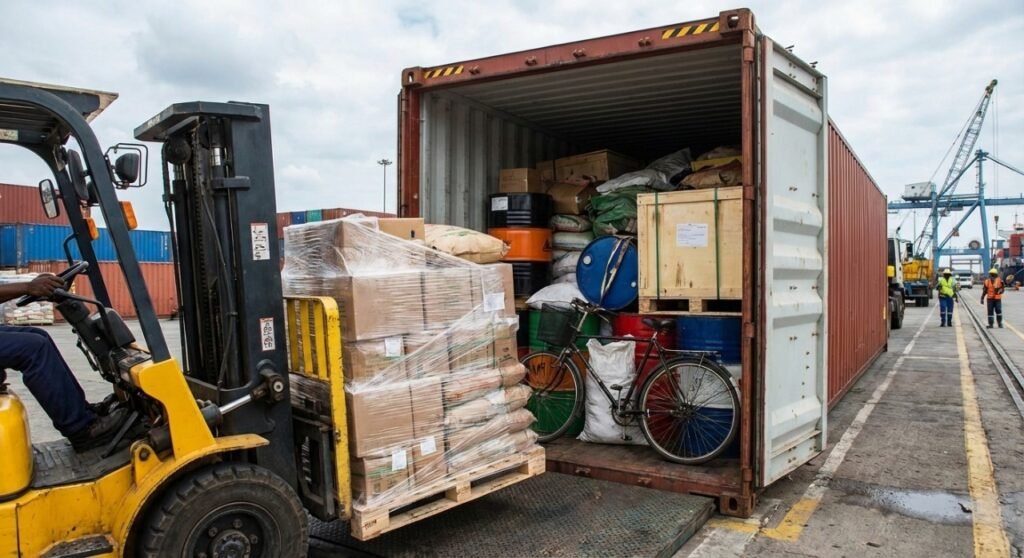
LCL stands for Less than Container Load. It acts like a “carpool” for cargo. You share container space with other shippers, and you only pay for the volume (CBM) you use. But is it always the cheapest option? Not always.
How LCL Pricing Works
LCL pricing is quoted per CBM (Cubic Meter) or per Ton, whichever is greater (see our guide on Chargeable Weight).
Example Quote: $50 USD per CBM. If you have 3.5 CBM of cargo, the ocean freight cost is: 3.5 * $50 = $175
The Hidden Costs of LCL
While the ocean freight looks cheap ($175 is nothing!), LCL is famous for destination fees. When the container arrives at the port (e.g., Los Angeles or New York), it must be taken to a specialized warehouse (CFS) to be “de-consolidated” (unpacked).
This labor costs money. You will often see fees like:
- CFS Charges: Container Freight Station fees for unpacking.
- Documentation Fees: Paperwork processing.
- Release Fees: Fees to release the cargo to your trucker.
These fixed fees can turn a $175 shipment into a $1,200 shipment very quickly. Always ask your forwarder for the “Landed Cost” estimate, not just the ocean freight rate.
When Should You Use LCL?
1. Volume is Under 15 CBM
Generally, if your shipment is under 13-15 CBM, LCL is the most economical choice.
- 0 – 2 CBM: Consider Air Freight (it might be faster and similar price after LCL fees).
- 2 – 15 CBM: Use LCL.
- 15+ CBM: Switch to FCL (Full Container Load).
2. You are Testing a New Product
If you are launching a new Amazon FBA product and only want to order 500 units to test the market, LCL is perfect. You don’t want to pay $3,000+ for a private container you can’t fill.
3. Frequent Small Restocks
It is better to ship small LCL batches monthly than to hold massive inventory waiting to fill a container. This helps cash flow.
How to Calculate Your LCL Volume
To get an LCL quote, your freight forwarder will ask for your total CBM.
- Measure your carton Length, Width, Height (in cm).
- Count your total cartons.
- Use a CBM Calculator to get the total volume.
Warning: LCL shipments are measured by the outermost part of the shipment. If you stack boxes on a pallet, the “empty air” between the boxes and the pallet corners counts as chargeable volume.